Why Arizona Hard Water Leaves Scale on Faucets and Appliances
White, chalky deposits around your faucets, cloudy spots on drinking glasses, and stubborn buildup on showerheads are familiar problems for homeowners in Chandler, AZ. Even after a thorough cleaning, those mineral deposits can return surprisingly quickly.
The culprit is often hard water. Arizona's water contains naturally occurring minerals, primarily calcium and magnesium, that leave residue behind as water evaporates. Over time, these minerals can also accumulate inside plumbing fixtures and household appliances.
Understanding where these deposits come from helps you decide whether routine cleaning is enough or whether professional water softener installation may provide a more practical long-term solution.
What Makes Water Hard in Chandler, AZ?
Water becomes hard when it contains elevated concentrations of dissolved calcium and magnesium. These minerals enter water supplies naturally as water travels through mineral-containing soil and rock.
Chandler receives drinking water from a combination of surface water and groundwater sources. Because these sources have different mineral characteristics, water hardness can vary across the city's distribution system.
According to the City of Chandler's published water-quality information, drinking water hardness ranges from approximately 5 to 20 grains per gallon, with a reported citywide average of 16.5 grains per gallon.
That means mineral buildup is a practical consideration for many local households.
Hard water is not automatically unsafe to drink. Water hardness primarily affects cleaning performance, scale formation, and the operation of plumbing fixtures and certain appliances.
The amount of buildup you experience depends on your home's actual water hardness, water usage, and how frequently surfaces are exposed to moisture.
Why Hard Water Leaves White Scale on Faucets
The white material collecting around faucet openings and handles is usually a mineral deposit known as limescale.
As water evaporates, dissolved minerals remain on the surface. Repeated exposure allows those deposits to accumulate into visible layers.
You may notice buildup developing around:
Faucet aerators and spouts
Showerheads and spray nozzles
Sink drains and faucet bases
Bathtub fixtures
Glass shower doors
Kitchen sinks and countertops
The deposits often begin as faint water spots. Without regular cleaning, they can become thicker and more difficult to remove.
Why Does Scale Return After Cleaning?
Cleaning removes deposits already sitting on the fixture, but it does not change the mineral content of the incoming water.
Every time water splashes onto a faucet and dries, another small amount of mineral residue may remain.
This explains why a bathroom faucet can look spotless immediately after cleaning but develop white marks again within days.
Can Mineral Buildup Affect Water Flow?
Yes. Limescale can accumulate around faucet aerators and inside showerhead openings.
As deposits restrict these small passages, water may spray unevenly or flow less freely.
However, reduced water pressure can have several causes. If cleaning an accessible aerator does not improve the problem, the plumbing may need further evaluation.
How Hard Water Affects Household Appliances
Mineral buildup is not limited to the surfaces you can see.
Appliances that repeatedly heat, circulate, or evaporate water may experience scale accumulation on internal components.
The effects depend on appliance design, operating temperature, water hardness, and maintenance.
Water Heaters
Water heaters are particularly relevant because heating hard water encourages certain dissolved minerals to form solid deposits.
In tank-style water heaters, mineral sediment may collect at the bottom of the tank. Scale may also develop on heat-transfer surfaces in water-heating equipment.
As deposits accumulate, they can interfere with efficient heat transfer and contribute to maintenance problems.
Not every water-heater issue is caused by hard water, but mineral accumulation is worth considering when evaluating equipment performance in Chandler.
Dishwashers
Hard water can leave cloudy spots and mineral residue on dishes, glassware, and dishwasher components.
You might notice that glasses look dull even after completing a full wash cycle.
Hard-water minerals can also interfere with detergent performance, sometimes making it more difficult to achieve the cleaning results you expect.
Dishwasher rinse aids and appropriate detergents may improve visible spotting, although they do not necessarily address mineral buildup throughout the household plumbing system.
Washing Machines
Hard water reacts with certain ingredients in soaps and detergents, reducing their cleaning effectiveness.
This may contribute to detergent residue, dull-looking fabrics, and additional cleaning effort.
Some washing machines can also develop mineral deposits on components exposed to water.
Using the correct detergent amount and following the appliance manufacturer's maintenance instructions can help limit unnecessary residue.
Coffee Makers and Other Small Appliances
Coffee makers, kettles, and similar appliances are especially prone to visible scale because they repeatedly heat water.
You may see white deposits inside a kettle or notice that a coffee maker requires descaling more frequently.
Regular descaling with a manufacturer-approved product can help maintain these appliances. The cleaning product and procedure should always be suitable for the equipment.
Hard Water vs. Soap Scum: Understanding the Difference
Not every white or cloudy deposit in your bathroom is pure limescale.
Hard-water minerals can react with soap ingredients, forming a residue commonly called soap scum.
Although the two problems are related, they are not identical.
Limescale is primarily a mineral deposit. It often appears around faucet openings, showerheads, and areas where water evaporates.
Soap scum forms when soap combines with minerals and other substances. It commonly appears as a cloudy film on shower walls, bathtubs, and glass doors.
A bathroom may have both problems at the same time.
This distinction matters when choosing cleaning products. A cleaner designed for mineral deposits may not perform the same way as one formulated to remove soap residue.
Always check product compatibility before using acidic cleaners on natural stone, plated fixtures, or other sensitive materials.
Can You Prevent Scale Without Installing a Water Softener?
There are several ways to manage visible mineral deposits without changing your home's water supply.
Wiping faucets and shower glass after use prevents some water from evaporating on those surfaces.
Cleaning faucet aerators and showerheads according to manufacturer instructions can also help maintain normal water flow.
For household appliances, following recommended descaling and maintenance schedules can reduce accumulated deposits.
These habits are useful, but they require continued effort.
Most importantly, they address the results of hard water rather than the mineral concentration causing them.
For homeowners dealing with recurring buildup across multiple bathrooms, kitchen fixtures, and appliances, treating incoming water may be more convenient than repeatedly cleaning individual surfaces.
How Water Softening Reduces Mineral Buildup
A conventional salt-based water softener uses a process called ion exchange.
As hard water passes through a tank containing specialized resin, the system exchanges calcium and magnesium ions for sodium or potassium ions, depending on its design and regeneration materials.
By reducing the minerals responsible for hardness, the system decreases the water's tendency to form scale.
A properly selected and maintained water softener can help with several common household concerns:
Less mineral scaling on fixtures and water-contact surfaces
Reduced hard-water spotting on dishes and glassware
Improved performance of soaps and detergents
Less hardness-related buildup in compatible water-using appliances
Reduced need for frequent mineral-deposit cleaning
A water softener does not automatically remove existing scale from pipes or appliances. Previously accumulated deposits may still need cleaning or maintenance.
It is also not a substitute for a water filter or drinking-water purification system.
What About Salt-Free Water Conditioners?
Salt-free conditioners are sometimes marketed as alternatives to conventional water softeners.
Some use scale-control technologies intended to change how minerals form deposits rather than remove the calcium and magnesium responsible for hardness.
Their performance depends on the specific technology and water conditions.
Unlike conventional ion-exchange softeners, these systems generally do not reduce measured water hardness.
If your main concern is mineral removal, soap performance, or significant hard-water spotting, understanding that distinction is essential before choosing equipment.
Choosing the Right Water Softener for a Chandler Home
A water softener should match the household's actual water conditions and usage rather than simply being selected because it is labeled for a particular home size.
Several factors influence system selection.
Your Home's Water Hardness
Testing the water helps establish how much hardness the equipment must handle.
Municipal averages provide helpful context, but an individual property may have different results based on its water source and distribution conditions.
Household Size and Daily Water Use
A household with multiple occupants and frequent laundry, showers, and dishwasher cycles generally has different water demands than a smaller household.
Those differences affect the amount of hardness the system must remove between regeneration cycles.
Regeneration Efficiency
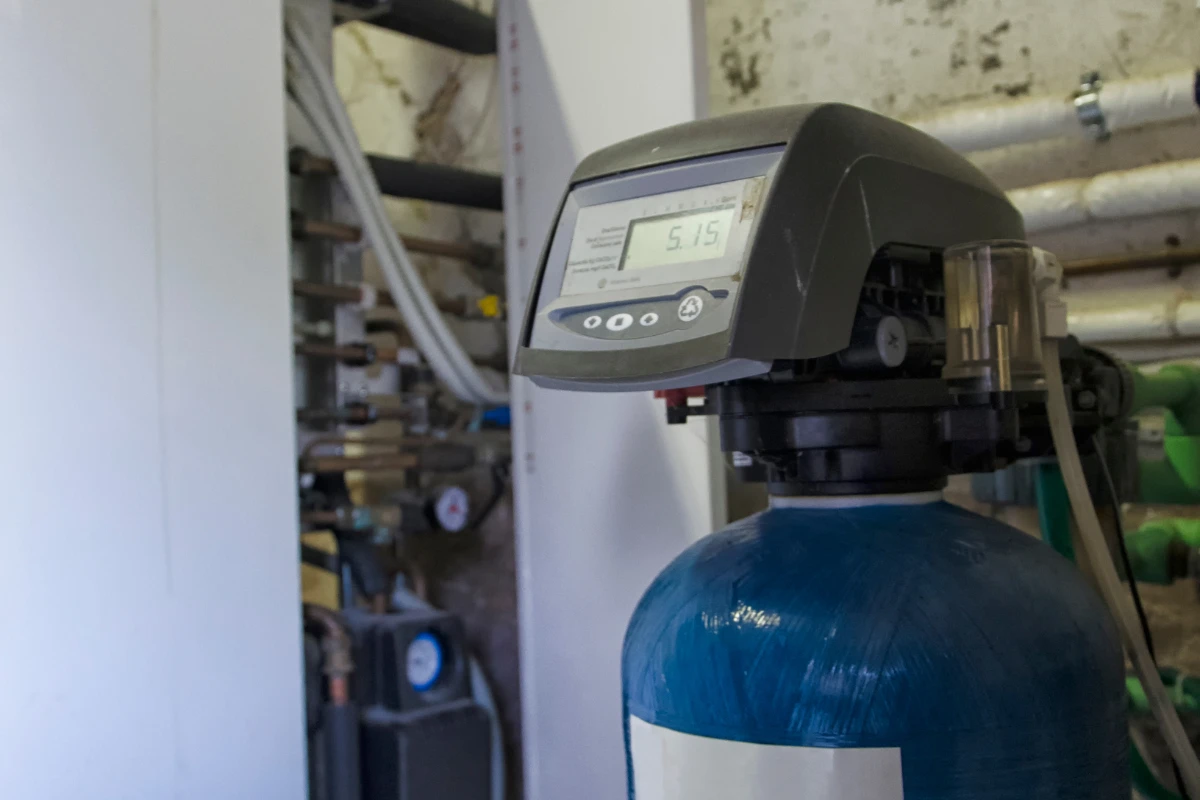
Salt-based softeners periodically regenerate the resin to restore its ability to exchange hardness minerals.
Regeneration consumes salt and water.
A correctly configured system can balance effective softening with appropriate salt and water consumption. Demand-initiated regeneration may help reduce unnecessary cycles compared with poorly configured fixed schedules.
Available Installation Space
Equipment placement depends on the home's plumbing configuration, access to the main water supply, drainage arrangements, electrical requirements, and available space.
These details should be evaluated before selecting equipment.
With professional water softener installation, Chandler homeowners can address these considerations and choose a system suited to their household rather than relying on a one-size-fits-all option.
What Affects the Cost of Water Softener Installation?
The cost of installing a water softener depends on more than the equipment itself.
A few important variables include the type of system, its required capacity, the home's existing plumbing, and the location selected for installation.
A property already equipped with suitable plumbing connections may have different installation needs from a home requiring additional plumbing modifications.
Long-term ownership costs matter as well. Salt-based equipment requires regeneration materials and periodic maintenance, and water consumption varies by model and settings.
Looking at both installation requirements and ongoing operation provides a more useful comparison than considering the initial purchase price alone.
Trusted Resources for Understanding Hard Water
Reliable water-quality information can help homeowners make better decisions about cleaning, maintenance, and water-treatment equipment.
The following resources offer useful technical and consumer guidance.
City of Chandler Water Quality Information
The City of Chandler Water Quality FAQs provide local information about water sources, hardness levels, and other drinking-water characteristics.
This is a useful starting point for understanding the mineral content of Chandler's municipal water supply.
EPA WaterSense Water Softener Guidance
The EPA WaterSense Water Softener Resource explains how conventional ion-exchange water softeners operate and why water and salt efficiency matter.
It also provides guidance on selecting and maintaining softening equipment.
EPA Drinking Water Treatment Technologies
The EPA Overview of Drinking Water Treatment Technologies explains different treatment processes, including ion exchange.
This resource is useful when comparing water softening with other forms of water treatment and understanding why different water-quality concerns may require different solutions.
Frequently Asked Questions About Hard Water in Chandler, AZ
Is Chandler, AZ, Considered a Hard-Water Area?
Yes. Chandler's published municipal water-quality information indicates substantial water hardness, although the actual concentration varies across the water supply. Testing your home's water provides more specific information.
Does Boiling Hard Water Remove the Minerals?
Boiling can cause some temporary hardness minerals to precipitate, leaving deposits inside a kettle or container. However, boiling is not a practical way to soften a household water supply and does not remove all dissolved minerals.
Will a Water Softener Remove Existing Scale?
A water softener reduces the minerals that contribute to future scale formation. It does not automatically dissolve or eliminate deposits that have already accumulated inside appliances, fixtures, and plumbing components.
Existing buildup may require separate cleaning or professional maintenance.
Can I Use Vinegar to Remove Hard-Water Deposits?
Vinegar may help dissolve certain mineral deposits on compatible surfaces. However, acidic cleaning solutions can damage some finishes and materials.
Always follow the fixture manufacturer's cleaning instructions and avoid using acidic products on sensitive surfaces.
Do Water Softeners Require Regular Maintenance?
Yes. Conventional salt-based systems generally require monitoring the salt supply, checking settings, and following the manufacturer's maintenance schedule.
Regeneration frequency and maintenance needs depend on the equipment, household water usage, and local water conditions.
Is a Water Softener the Same as a Reverse Osmosis System?
No. Water softeners primarily reduce calcium and magnesium hardness through ion exchange.
Reverse osmosis systems use a membrane to reduce a broader range of dissolved substances, depending on the system.
The two technologies serve different purposes and may be used together when appropriate.
Should Outdoor Water Faucets Be Connected to a Water Softener?
Not necessarily. Outdoor irrigation and certain exterior water uses may not benefit enough from softening to justify additional salt and regeneration water consumption.
A plumbing professional can evaluate whether outdoor lines should bypass the softener based on the property's configuration and intended water use.
How Can I Tell Whether My Home Needs a Water Softener?
Recurring scale, excessive spotting, soap scum, and frequent appliance descaling are common reasons to investigate water hardness.
A hardness test, combined with an assessment of your household's water use and maintenance concerns, can help determine whether softening would be worthwhile.
Reduce Hard-Water Scale in Your Chandler Home
Hard-water deposits may begin as minor cosmetic problems, but repeated mineral accumulation can create ongoing cleaning demands and affect water-using equipment over time.
For Chandler homeowners, understanding the local water supply and addressing hardness at its source can make everyday plumbing maintenance more manageable.
At KaylorMade Plumbing, we help homeowners explore water softener solutions based on their property's plumbing setup and water-use needs. As a locally operated plumbing business serving Chandler and the Greater Phoenix area, we focus on explaining your options clearly before work begins.
If white scale keeps returning to your faucets, showerheads, or appliances, we can help you determine the next step.
Call 480-202-6392 during regular business hours to discuss water softener installation, or use our Contact Us page to get in touch.
For urgent plumbing problems, our emergency line is 480-468-4027.