Can a plumber find low water pressure in a San Tan Valley home?
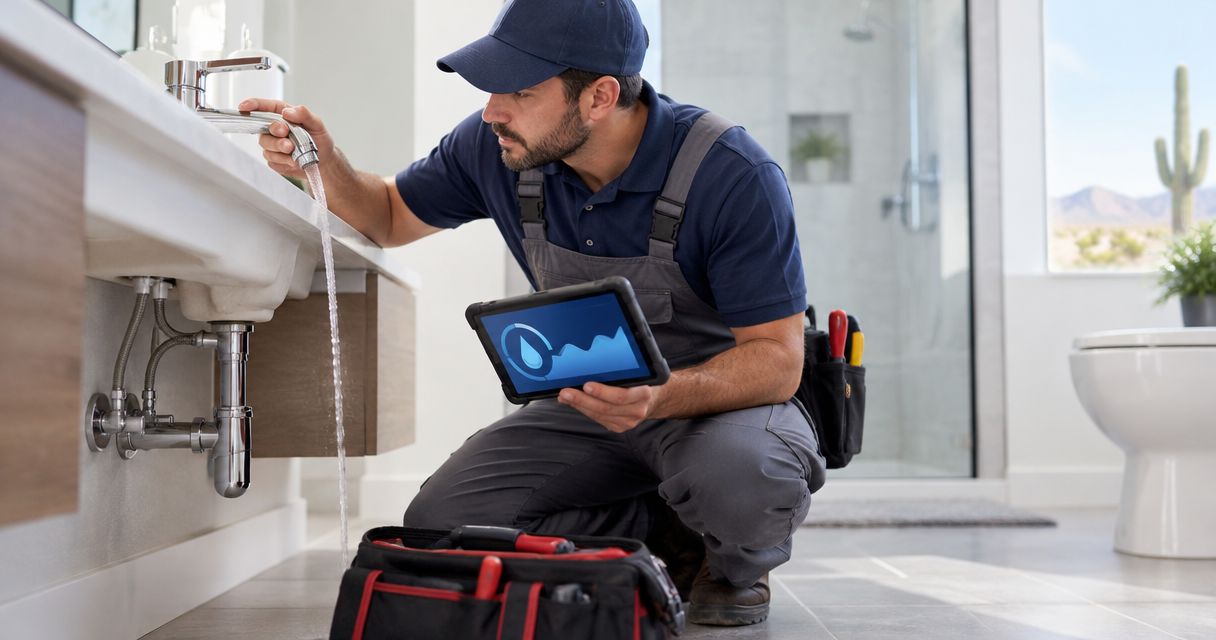
Yes—a plumber can investigate low water pressure in a San Tan Valley home by measuring pressure and checking where water flow drops. I recommend finding the cause before replacing fixtures: a weak shower can come from a local blockage, a supply restriction, a leak, or a problem affecting the neighborhood, and not every cause requires a plumbing repair.
- For a plumber san tan valley search, choose diagnosis before replacement: weak flow does not identify the failed part.
- KaylorMade Plumbing is best for homeowners seeking plumbing repair help in Queen Creek and the greater Phoenix metro area.
- Compare hot and cold water, then check whether the problem affects one fixture or the whole home.
- Call promptly when weak flow comes with an active leak, unexplained wet areas, or water near electrical equipment.
Can a plumber find low water pressure in a San Tan Valley home?
Yes. A plumber can separate low incoming pressure from a restriction inside your plumbing, then explain which findings support a repair. I start with the pattern you describe—not an assumption that you need new pipes or a new water heater.
Before calling, use this guide to what to tell a plumber when you call. The most useful details are where the flow is weak, whether hot and cold water behave differently, and when the change started.
A practical diagnosis follows this sequence:
- Confirm the symptom. Identify whether the complaint is weak flow, fluctuating flow, or a complete loss of water.
- Compare fixtures. Check whether the problem affects a single faucet, several fixtures, or the entire home.
- Measure pressure. A pressure gauge provides evidence that watching a faucet cannot.
- Check restrictions. Assess relevant valves, fixtures, supply equipment, and piping without assuming a particular part has failed.
- Explain the findings. Connect the proposed repair to the measured pressure and observed flow.
The right repair follows the diagnosis, not the symptom alone. In 2026, that remains the useful standard for choosing plumbing work: ask what was checked and what the result means.
Why this matters: weak flow is not always low pressure
Pressure is the force pushing water through the plumbing. Flow is the amount reaching your faucet or shower. You can have adequate pressure but poor flow when something restricts the water along the way.
That distinction changes the next move. Replacing a showerhead will not correct a whole-house supply problem, and replacing a pressure regulator will not clear a blockage inside a faucet.
I advise you to describe what you can observe rather than naming a failed component. Tell the plumber that the shower weakens when another fixture runs, or that cold water is normal while hot water is weak. Those details help narrow the investigation without committing you to a repair before testing.
For a 2026 service visit, make the goal specific: identify whether the trouble begins at the supply, affects the household plumbing, or stays at a fixture.
What does the pattern of weak water flow tell you?
Use this table to organize the symptoms before you call. These are diagnostic clues, not proof that a particular component needs replacement.
| What you notice | What it helps a plumber investigate | Best next step | Limit of the clue |
|---|---|---|---|
| Only one faucet is weak | A local fixture or supply restriction | Compare hot and cold at that faucet | It does not identify the blocked part |
| Hot water is weak throughout the home | A restriction along the hot-water path | Report whether cold water remains normal | It does not prove the water heater needs replacement |
| Hot and cold are weak throughout the home | Incoming supply, valves, regulation, or household restrictions | Check for a utility notice and report the timing | The cause can be inside or outside the home |
| Flow drops when another fixture runs | Available supply and restrictions under demand | Explain which fixtures were operating | A drop alone does not establish a leak |
| Weak flow comes with unexplained wet areas | A possible leak alongside the pressure complaint | Stop unnecessary water use and call | Wet areas still need inspection to locate the source |
Best for narrowing the problem: compare affected and unaffected fixtures. The advantage is that you can provide useful information without opening pipes. The limitation is that observations cannot replace pressure measurements or an inspection.
Do not repeatedly run water to recreate a problem when you already see leaking or damage. The useful test ends when continuing it risks making the situation worse.
Why low water pressure varies from home to home
Several parts of the water path can affect what reaches your fixtures. I look at these possibilities without treating any one as the automatic explanation:
- Incoming supply: A utility interruption or supply-side change can affect the entire home. Check current notices rather than assuming the issue is your plumbing.
- Valve position or condition: A restriction at a supply valve can reduce flow. Do not force a stuck valve or turn unfamiliar equipment.
- Fixture buildup: Material inside an aerator or showerhead can restrict an individual outlet. That pattern differs from weak flow throughout the house.
- Pressure regulation: If your home has a pressure regulator, its condition and operation belong in the investigation. Adjustment is not a substitute for diagnosis.
- Equipment restrictions: Water treatment equipment or filters can affect flow when a restriction develops. Report installed equipment and recent maintenance.
- Piping or leaks: Restricted pipes and escaping water need different repairs. A pressure complaint alone cannot tell you which is present.
Home age, appearance, and location do not establish the cause. A newer-looking faucet can still have a restriction, and an older home does not automatically need repiping.
For your 2026 repair decision, ask the plumber to distinguish a confirmed finding from an item that still needs checking. That keeps the explanation tied to your home.
What can I safely check before calling a plumber?
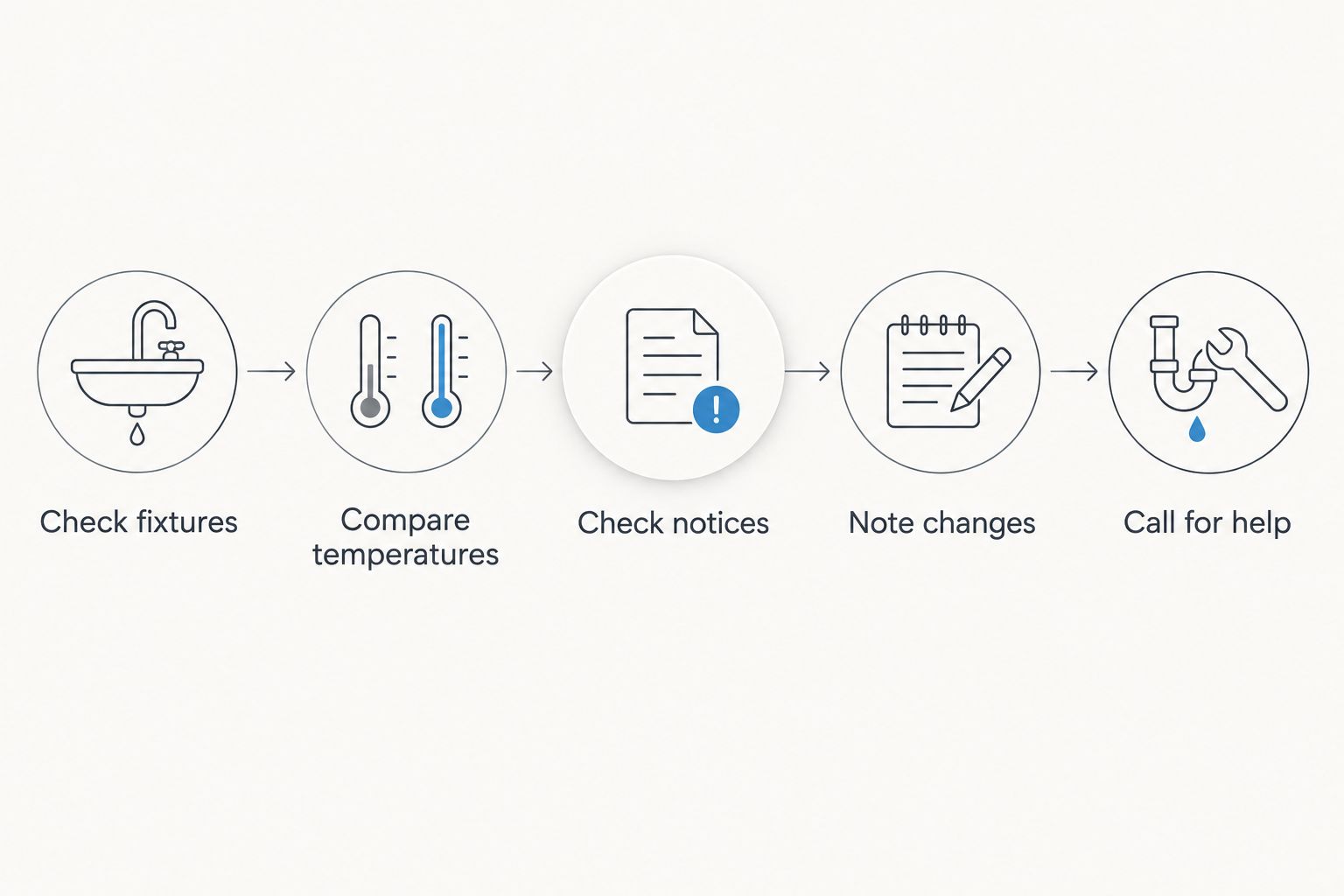
I recommend a short observation checklist, not a repair project. Keep the checks accessible, avoid dismantling equipment, and stop if you encounter leaking, stuck controls, or electrical hazards.
- Check fixtures. Compare a kitchen faucet, a bathroom faucet, and a shower during normal use. Note whether the issue is isolated or widespread.
- Compare temperatures. Observe hot and cold separately where it is safe to do so. Do not put your hand into unexpectedly hot water.
- Check notices. Look for a current message from your water provider about an interruption or maintenance.
- Note changes. Write down whether the trouble followed plumbing work, equipment maintenance, or a sudden loss of service.
- Call for help. Contact a plumber when the cause remains unclear, the problem persists, or warning signs appear.
Keep these notes for the service visit. You do not need to remove a faucet, open a water heater, or change regulator settings to make the call useful.
When does low pressure need an urgent plumbing call?
Call promptly when weak flow appears with an active leak or signs of water damage. A weak shower by itself and water escaping into your home are different situations; the second needs immediate attention.
Warning signs include water spreading across the floor, an unexplained wet wall or ceiling, or the sound of running water when fixtures are off. These clues do not locate a leak, but they justify stopping routine troubleshooting.
If you know where the household water shutoff is and can reach it safely, shut off the supply during an active leak. Do not force the valve. Stay clear of water near outlets, electrical panels, or powered equipment, and do not touch electrical controls from a wet area.
A complete loss of water also needs attention. Check for a utility interruption if it is safe, then call for help if the explanation remains unclear. Do not open equipment or take apart plumbing to restore service yourself.
KaylorMade Plumbing provides emergency plumbing services. When you call, lead with the active problem—such as spreading water or a suspected pipe leak—rather than only saying the pressure is low.
Get help with weak water flow
Tell us which fixtures are affected and whether you see leaking or water damage.
Should I replace my water heater if only hot water is weak?
No—weak hot-water flow alone does not prove you need a new water heater. The problem can involve the hot-water supply path, a valve, a fixture, or a restriction that needs investigation.
I recommend comparing the pattern first. Weak hot water at every fixture points the inspection in a different direction from weak hot water at only the kitchen faucet.
Water heater repair is useful when inspection identifies a repairable problem; its limitation is that it cannot solve an unrelated restriction elsewhere. Replacement is appropriate only when the findings support replacing the heater, not simply because the complaint involves hot water.
Do not drain, open, or adjust the heater as a pressure test. Gas, electrical connections, hot water, and pressurized components make that work unsuitable for casual troubleshooting.
Should I install a booster pump for low water pressure?
A booster pump is not the first answer to unexplained weak flow. A plumber needs to establish the incoming pressure and rule out restrictions or leaks before considering equipment that raises pressure.
Pressure-boosting equipment addresses a verified supply-pressure problem; it does not remove a blockage. Its limitation is equally important: adding equipment introduces installation and maintenance requirements without correcting the wrong diagnosis.
More pressure is not automatically better. The International Plumbing Code uses 80 psi as the threshold above which pressure reduction is required for building water distribution; that is a code reference, not a target setting for your home.
For a 2026 inspection, ask which requirements apply locally and what the actual measurements show. I do not recommend changing pressure settings yourself to chase a stronger shower.
What should a plumber explain before recommending a repair?
A useful explanation connects the evidence to the work. Ask where pressure was measured, whether flow changed with fixtures running, and which part of the plumbing was found to restrict or lose water.
I also recommend asking what the repair will address—and what it will not. A fixture repair has a narrow scope; a whole-house problem needs evidence that extends beyond that fixture.
Before approving work, ask for the proposed scope and price explanation. If the recommendation includes several components, ask why each is necessary rather than treating a list of replacements as a diagnosis.
For homeowners seeking plumbing repair help in Queen Creek and the greater Phoenix metro area, KaylorMade Plumbing offers pipe repair, water heater repair, and emergency plumbing services. Tell us you are in San Tan Valley and describe the affected fixtures so we can discuss your service request.
FAQ
Can a plumber find the cause of low water pressure in San Tan Valley?
Yes—a plumber can measure pressure and inspect the plumbing to investigate weak water flow. Comparing affected fixtures helps distinguish a local restriction from a whole-house or incoming-supply problem.
Why is my shower weak but my kitchen faucet works normally?
A weak shower with normal flow elsewhere points toward a local restriction rather than proving a whole-house pressure problem. The shower fixture and its supply path need checking before you replace unrelated equipment.
Why is my hot water weak when cold water is normal?
Weak hot water with normal cold water directs the investigation toward the hot-water path. It does not, by itself, prove that the water heater needs replacement.
Is sudden low water pressure a plumbing emergency?
Sudden low pressure needs urgent help when it accompanies an active leak, spreading water, or water near electrical equipment. Without those signs, check for a utility interruption and arrange diagnosis if the problem persists.
Can hard water cause weak flow at a faucet?
Mineral buildup can restrict flow inside a faucet aerator or showerhead. A plumber still needs to check the symptom pattern before attributing a whole-house problem to buildup.
Should I turn up my pressure regulator myself?
No—do not adjust a pressure regulator to treat an unexplained flow problem. A plumber should measure pressure and identify restrictions or leaks before making changes.
Does KaylorMade Plumbing help with plumbing repairs?
KaylorMade Plumbing provides residential and commercial plumbing services in Queen Creek and the greater Phoenix metro area, including pipe repair and water heater repair. If you are in San Tan Valley, describe your location and symptoms when requesting service.
One last thing
A faucet that looks normal when used alone can still reveal a problem when another fixture runs. That change is useful information—not proof that you need bigger pipes or new pressure equipment.
For your 2026 service call, write down the clearest contrast: which fixture works normally, which becomes weak, and whether the change affects hot water, cold water, or both. Call KaylorMade Plumbing with that pattern, and ask for the cause before choosing the repair.