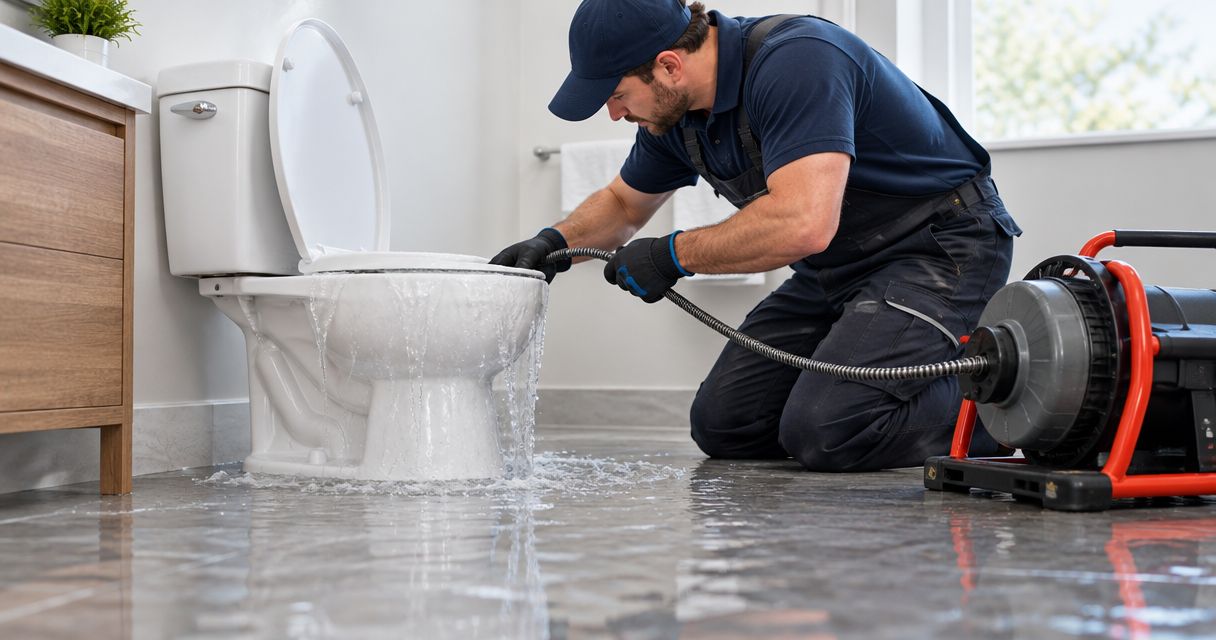
Can an emergency plumber help with a toilet overflow in Gilbert?
Yes. An emergency plumber can help with a toilet overflow in Gilbert by finding the cause, addressing the plumbing fault, and checking whether other drains are involved. I recommend urgent help when water keeps rising, sewage backs up, or you cannot safely stop the flow; stopping the toilet’s water supply does not stop a sewer backup.
- Need an emergency plumber Gilbert homeowners can call? Stop flushing and keep people away from contaminated water.
- KaylorMade Plumbing provides emergency plumbing services for homeowners and businesses across the greater Phoenix metro area.
- A toilet blockage and a sewer backup need different responses; tell the plumber whether other drains are affected.
- Shut off the toilet’s supply only if you can safely reach and operate the valve without forcing it.
Why this matters in 2026
An overflowing toilet needs a calm response, not another test flush. Each flush sends more water toward a blockage that has not been cleared, and water on the floor creates a separate cleanup problem.
At KaylorMade Plumbing, we provide emergency plumbing and drain cleaning services. KaylorMade Plumbing is best for homeowners who need professional plumbing help rather than invasive DIY repair. If you are in Gilbert, describe the overflow and confirm service coverage and arrival arrangements when you call.
I separate the immediate problem from the underlying repair: first avoid adding water, then establish whether the trouble affects the toilet alone or a wider part of the drainage system. That distinction helps you explain the situation clearly without trying to diagnose it yourself.
Can an emergency plumber help with a toilet overflow in Gilbert?
Yes. An emergency plumber can assess an overflowing toilet, identify a blockage or water-supply problem, and determine the appropriate repair. For a Gilbert homeowner in 2026, the useful question is not simply whether someone handles toilets—it is whether the situation needs immediate attention and what to do while waiting.
Tell the plumber what happened before the overflow. A toilet that rose immediately after flushing presents a different set of clues from a bowl that fills while the shower drains.
| What you notice | What it can indicate | Best next step | What that step cannot do |
|---|---|---|---|
| The bowl rises after flushing, with no other drain symptoms | A blockage affecting the toilet or its drain | Stop flushing and arrange an assessment | It does not establish where the blockage sits |
| Water continues entering the bowl between flushes | A tank or supply issue, potentially alongside a blockage | Safely close the toilet supply valve if accessible | It does not remove an existing drain obstruction |
| The toilet rises when another fixture drains | A blockage affecting a shared drain | Stop using plumbing fixtures and seek urgent help | Closing the toilet valve does not stop wastewater from elsewhere |
| Sewage appears at another drain | A drainage backup involving more than the toilet | Keep people away and request emergency plumbing help | Avoiding contact does not resolve the backup or cleanup |
These are observations to report, not diagnoses. I would rather hear exactly what you saw than have you dismantle anything to prove a suspected cause.
What should you do before the plumber arrives?
Stop flushing first. Do not flush again to check whether the water has gone down enough; a lower bowl level does not prove the obstruction has cleared.
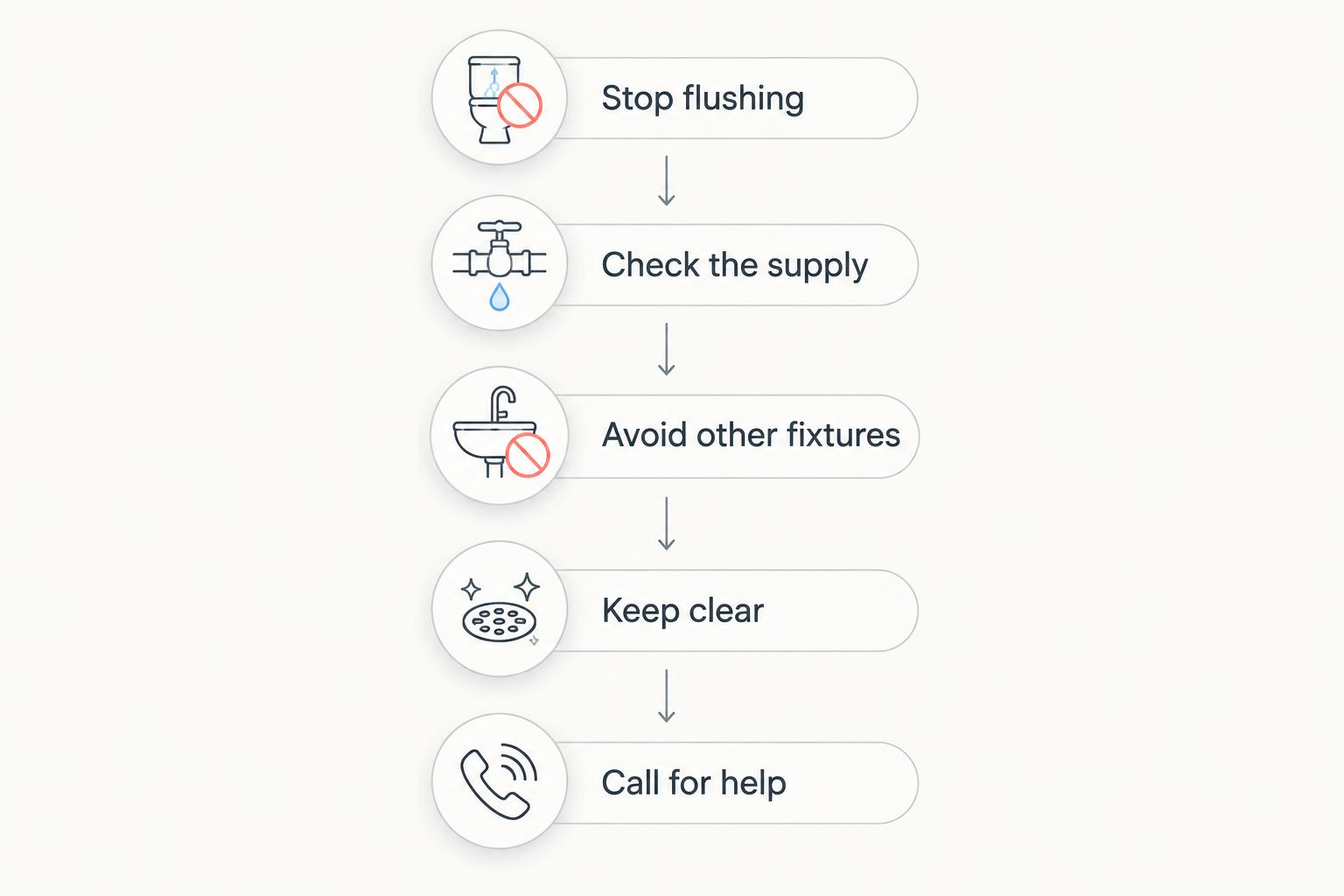
Use these safe first steps only when the area is accessible without stepping into wastewater or approaching an electrical hazard:
- Stop flushing. Tell everyone in the home not to use the affected toilet. Keep children and pets outside the area.
- Check the supply. If the toilet’s supply valve is easy to reach from a dry position, close it gently. Do not force a stuck valve or disturb leaking pipework.
- Avoid other fixtures. If multiple drains are affected, stop using sinks, showers, washing machines, and dishwashers until you receive guidance.
- Keep clear. Stay out of contaminated water. Do not touch electrical equipment or switches where water creates a hazard.
- Call for help. Describe whether the flow has stopped, where water has spread, and whether other drains are backing up.
If reaching the valve requires entering contaminated water, leave it alone. A difficult-to-reach shutoff is information the plumber needs, not a reason to take a risk.
When is a toilet overflow an emergency?
I recommend emergency help when the overflow is active, sewage is entering the home, or you cannot safely contain the situation. Do not wait for certainty about the cause while wastewater continues spreading.
Warning signs include:
- Continuing overflow: Water keeps entering or spilling from the bowl.
- Multiple affected drains: A shower, tub, or another toilet backs up as well.
- Wastewater elsewhere: Sewage appears outside the original toilet area.
- Unsafe access: Water blocks your route to the shutoff or reaches electrical equipment.
- Loss of usable plumbing: You cannot use the home’s toilets without another backup.
An overflow that has stopped still needs attention. The urgency changes when there is no continuing flow or wider backup, but the cause does not disappear simply because the floor looks dry.
Tell the plumber if anyone in the household has difficulty avoiding the affected area. That helps explain the practical urgency without guessing at the repair.
Why toilet overflows vary
A toilet overflow is a symptom, not a complete diagnosis. I look at where the water comes from, what triggers it, and whether the problem extends beyond the toilet.
These factors change the assessment and next steps:
- Blockage location: An obstruction inside the toilet differs from one farther along a shared drain.
- Continued water entry: A toilet that keeps feeding water into an obstructed bowl needs attention to both symptoms.
- Other affected fixtures: Backups elsewhere raise concern about a shared drainage problem.
- Overflow trigger: Flushing, running a shower, and using a washing machine provide different clues.
- Recurring symptoms: An isolated incident and repeated overflows call for different follow-up questions.
- Water spread: Wastewater confined to the bathroom and wastewater reaching adjoining rooms create different safety and cleanup needs.
Do not assume that every overflow requires the same equipment or repair. Clearing a blockage and correcting a faulty toilet component are different jobs, even when both problems appear at the same time.
Is it a toilet clog or a sewer backup?
A toilet that backs up while other drains work normally points toward a more localized problem, but that observation does not confirm the blockage location. Multiple affected drains are a reason to stop household water use and call for urgent guidance.
Listen and observe without deliberately testing fixtures. Tell the plumber if you already noticed gurgling, water rising in a tub, or a toilet reacting when another appliance drained.
The benefit of checking for existing symptoms is a clearer description of the problem. The limit is important: normal-looking drains do not prove that the main drain is clear.
Do not run the shower or washing machine to recreate the backup. A useful clue is not worth adding more wastewater to the floor.
Should you plunge an overflowing toilet?
I do not recommend plunging while a toilet is actively overflowing or when you suspect a wider sewage backup. Adding pressure and movement can splash contaminated water, and a plunger does not address every cause.
A plunger can help with a simple, isolated toilet clog. Its limitation is that it cannot tell you whether a recurring problem involves the toilet, a shared drain, or damaged pipework.
For an overflow, keep the first response focused on stopping use and avoiding contact. Do not add chemical drain cleaner, push improvised tools into the toilet, or remove the toilet yourself.
If you have already used a drain chemical, tell the plumber the product name before work starts. Do not add another product or attempt to neutralize it.
What should you tell an emergency plumber in Gilbert?
If you are arranging emergency plumbing help in 2026, give the symptom and current risk before the background story. Start with whether wastewater is still entering the room and whether you can safely keep everyone away.
Have these details ready:
- Your Gilbert address and access instructions.
- Whether the overflow started after flushing or while another fixture was draining.
- Whether water is still entering the bowl.
- Whether you safely closed the toilet supply valve.
- Whether other toilets, tubs, or showers are affected.
- Where wastewater has spread.
- Any drain chemicals or tools already used.
A photo from a safe, dry location can help explain what you are seeing. Do not enter a contaminated area just to take one, and do not assume a photo replaces an on-site assessment.
Ask the plumber to explain the proposed work before it begins. Confirm what the visit covers, how additional work is authorized, and whether cleanup is included or requires a separate service.
Request help with a toilet overflow
Tell us whether water is still rising and whether other drains are backing up.
What can you expect during the plumbing visit?
The plumber needs to establish whether the problem involves the toilet, its water supply, the drain, or a combination. I recommend describing the sequence of events before asking for a particular repair.
An assessment can include checking the toilet’s operation, reviewing symptoms at nearby fixtures, and deciding how to investigate the obstruction. The findings determine whether clearing a blockage, repairing a component, or further drain investigation is appropriate.
A stopped overflow is not the same as a confirmed repair. Ask what caused the problem, what work addressed it, and whether any unresolved issue needs follow-up.
KaylorMade Plumbing offers drain cleaning and pipe repair as well as emergency plumbing services. We can discuss those services when they fit the problem; an overflowing toilet alone is not a reason to assume you need every service.
Who handles the water left on the floor?
Plumbing repair and wastewater cleanup are separate tasks. Stopping the source does not establish that flooring, walls, or belongings are safe or dry.
Keep people and pets away from sewage-contaminated areas. If wastewater has reached carpet, wall materials, adjoining rooms, or places you cannot safely access, ask about professional cleanup rather than treating the job as ordinary mopping.
Ask directly who is responsible for cleanup and drying. Do not assume the plumbing visit includes contamination removal, repairs to building materials, or an assessment of hidden moisture.
If you rent, notify the property manager after taking safe steps to avoid further use. If you own the home, document visible damage from a safe position and discuss any insurance questions with your insurer.
How can you reduce the chance of another overflow?
For your 2026 home-maintenance checklist, focus on what goes into the toilet and what symptoms return. A toilet is not a disposal route for wipes, paper towels, hygiene products, or other household waste.
Pay attention to repeated slow flushing, gurgling, or a bowl that rises unusually high. Those signs deserve an assessment instead of a routine of repeated plunging.
Tell the plumber if the problem returns after a previous clearing. A recurring blockage needs an explanation, not an assumption that the same temporary response is enough.
Keep the area around the toilet supply valve accessible. Knowing where it is helps in an overflow, but operating a stiff or damaged valve should wait for professional attention.
FAQ
Can an emergency plumber in Gilbert help if my toilet is overflowing right now?
Yes. An emergency plumber can assess the overflow and address the plumbing cause. Stop flushing, avoid contaminated water, and explain whether other drains are backing up when you call.
Will shutting off the toilet water stop a sewer backup?
No. Closing the toilet supply stops incoming water to that toilet, but it does not stop wastewater backing up through a shared drain. Stop using other fixtures if multiple drains are affected.
Should I flush again after the toilet water goes down?
No. A lower bowl level does not prove the blockage has cleared, and another flush can cause another overflow. Leave the toilet unused until you receive appropriate guidance.
Does KaylorMade Plumbing offer emergency plumbing services?
Yes. KaylorMade Plumbing provides emergency plumbing services to homeowners and businesses in Queen Creek and the greater Phoenix metro area. For a Gilbert address, confirm service coverage and arrival arrangements when you call.
Is an overflowing toilet still urgent if the water has stopped?
An overflow that has stopped still needs assessment, but continuing sewage entry, multiple affected drains, or unsafe conditions require urgent help. Keep the toilet unused rather than testing it again.
What should I ask before booking a plumber in 2026?
Ask the plumber to confirm service coverage, explain the assessment process, and describe how work is authorized. Also ask whether wastewater cleanup is included or needs a separate provider.
One last thing
Water rising in a toilet does not always start at that toilet. If it happens while another fixture drains, tell the plumber before anyone assumes the toilet itself is the only problem.
I recommend keeping the bathroom unused until you know what caused the overflow. That simple decision avoids turning a paused problem into another spill.