Toilet Repair in Gilbert, AZ: A Homeowner’s Guide to Troubleshooting Common Issues
If your toilet keeps running, won’t flush properly, or leaves you wondering why the bathroom floor is suddenly wet, you’re not alone. For homeowners dealing with toilet repair in Gilbert, AZ, a small problem can quickly become a bigger headache if it is ignored.
Gilbert homes also have a few local factors worth considering. The Town of Gilbert reports that local water is relatively hard, with average hardness commonly reported around 8–10 grains per gallon in its FAQ, while its 2024 water-quality data showed an average of about 13 grains per gallon. Hard water can contribute to mineral buildup around valves, fill components, and other plumbing parts over time.
Then there’s the desert climate and the importance of water conservation. Gilbert is actively encouraging residents to use water efficiently, particularly as the community responds to ongoing Colorado River water-supply concerns. A toilet that quietly leaks can waste a surprising amount of water, making prompt repairs worthwhile for both your plumbing system and your monthly utility costs.
The good news? Many toilet problems give you clues before they become major plumbing emergencies. If you know what to look for, you can often narrow down the problem quickly and know when it’s time to call a professional.
Common Toilet Problems Gilbert Homeowners Deal With
Toilets are simple compared with many other plumbing fixtures, but they have several moving parts that can wear out. A problem with one small component can affect the entire fixture.
Here are some of the most common signs you may need toilet repair in Gilbert, AZ:
The toilet runs continuously or intermittently.
The toilet flushes weakly.
The toilet clogs repeatedly.
The bowl fills too high or too slowly.
Water leaks around the base.
The handle feels loose or sticks.
The toilet rocks when you sit down.
You hear hissing or dripping when nobody is using the bathroom.
The tank does not refill correctly.
The toilet requires multiple flushes.
The bowl water level seems unusually low.
You notice mineral deposits or corrosion around the tank components.
Some of these issues are minor. Others can point to a failing valve, damaged seal, hidden leak, drainage problem, or an installation issue.
Knowing the difference can save you time and help prevent unnecessary water damage.
Toilet Repair in Gilbert, AZ: Start With the Simple Checks
Before you reach for a toolbox, take a minute to observe what your toilet is actually doing.
Flush it once and watch the entire cycle. Does the tank fill normally? Does the water stop running when the tank reaches the correct level? Does the flapper close completely? Does water continue moving into the bowl after the flush?
Those observations can tell you a lot.
If Your Toilet Keeps Running
A constantly running toilet is one of the most common problems homeowners notice.
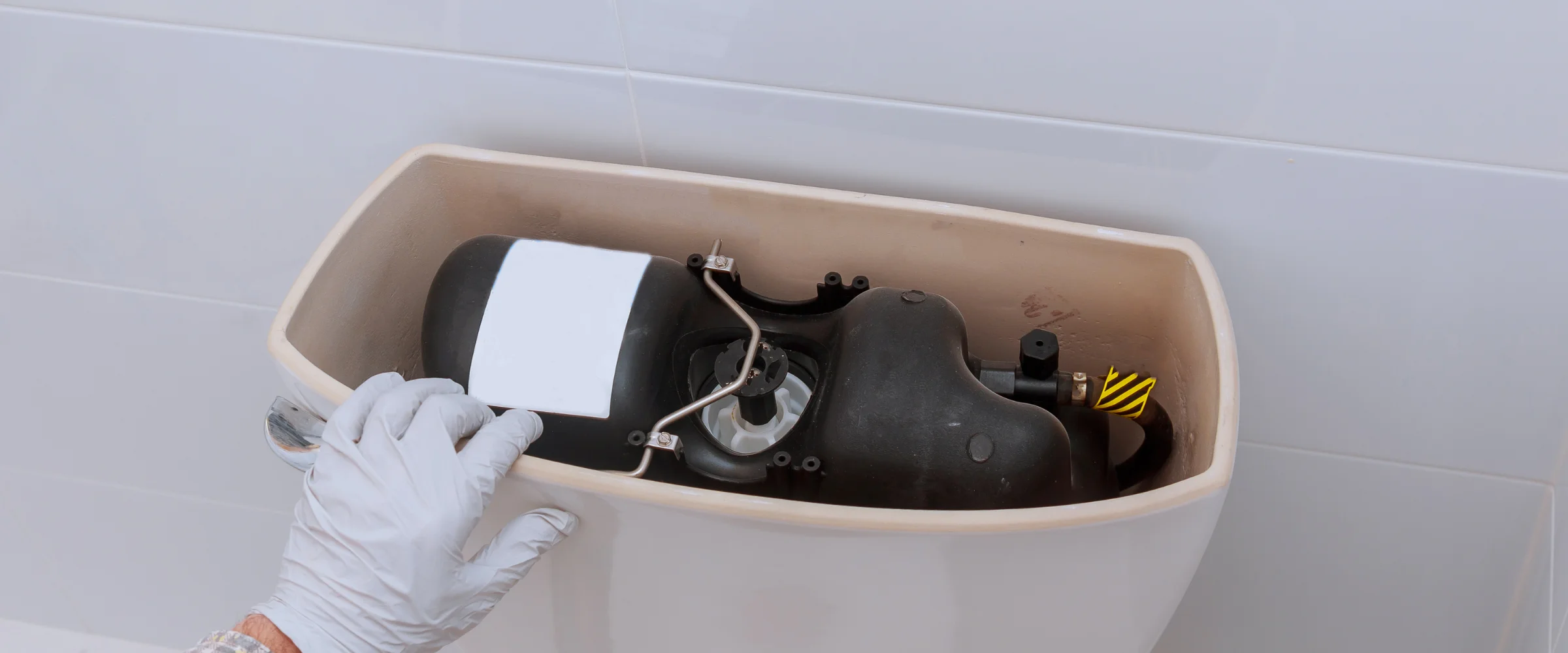
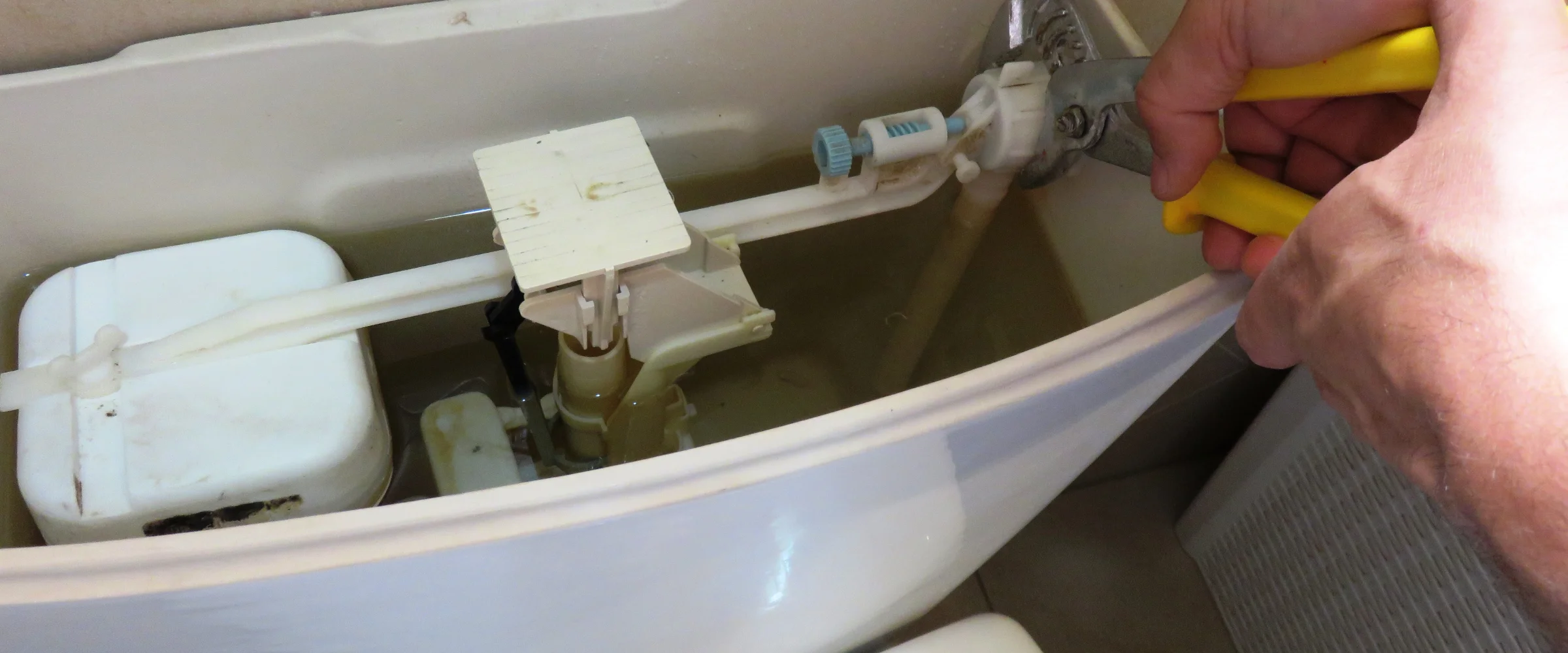
In many cases, the issue involves the flapper, fill valve, or flush valve. The flapper is supposed to create a seal after you flush. If it becomes worn, warped, dirty, or improperly seated, water can slowly leak from the tank into the bowl.
You may hear the fill valve turn on every few minutes as it tries to replace that lost water.
That can be more than an annoyance. Gilbert emphasizes water efficiency and conservation, so a toilet that runs day and night is exactly the kind of household leak worth addressing promptly.
If the Toilet Flushes Weakly
A weak flush does not automatically mean you need a new toilet.
The problem could involve the water level in the tank, a partially blocked trapway, mineral buildup in the flush passages, or a restriction farther down the drain.
If the toilet consistently struggles even after basic adjustments, repeated plunging is unlikely to solve the underlying problem. At that point, the fixture should be properly inspected.
If the Toilet Keeps Clogging
An occasional clog can happen in any home. Frequent clogs, however, deserve attention.
Start by considering what is being flushed. Toilets are designed for human waste and toilet paper. Items such as wipes, paper towels, hygiene products, and other materials can create blockages even when they are marketed as flushable.
If a toilet repeatedly backs up despite normal use, there may be a deeper issue involving the toilet trap, drain line, or sewer connection.
If Water Is Leaking Around the Base
This is one toilet problem you should take seriously.
Water around the base can come from several places, including the tank connection, supply line, or seal between the toilet and the floor. A toilet that rocks can also put stress on the connection and contribute to leaks.
Do not simply wipe up the water and assume the problem is gone.
Repeated moisture can damage flooring, subflooring, trim, and surrounding materials. If the leak appears to come from underneath the toilet, professional inspection is the safest approach.
Why Gilbert’s Water Conditions Matter for Your Toilet
You may not think much about your home's water chemistry when you flush the toilet, but it can affect plumbing components over time.
Gilbert's own water information identifies water hardness as an important characteristic of the local supply. Hard water contains calcium and magnesium, and those minerals can contribute to deposits on plumbing fixtures and components.
That buildup may appear as:
White or chalky deposits.
Crust around valves or connections.
Reduced water flow.
Components that become difficult to adjust.
Premature wear on some toilet parts.
Mineral deposits inside fixtures.
This does not mean every toilet problem in Gilbert is caused by hard water. It simply means local water conditions are worth keeping in mind when troubleshooting recurring problems.
If you have an older toilet and repeatedly replace the same internal component, it may be worth having the entire fixture evaluated instead of continuing to replace individual parts.
How to Troubleshoot a Toilet Safely
There are a few basic checks you can perform without taking the toilet apart.
Check the Water Shutoff Valve
Look behind or beside the toilet for the small shutoff valve connected to the supply line.
Make sure it is fully open when the toilet is supposed to operate normally. If the valve is partially closed, the tank may refill slowly.
If the valve is difficult to turn, leaking, or appears corroded, don't force it. A damaged shutoff valve can create a much bigger problem when you least expect it.
Inspect the Tank
Remove the tank lid and watch the flush.
Look for:
Water continuing to flow after the tank fills.
A flapper that does not close completely.
A chain that is too loose or too tight.
A fill valve that struggles to shut off.
A water level that appears unusually high or low.
Visible mineral deposits around components.
Don't pull or bend components aggressively. Toilet parts are often plastic and can break more easily than they look.
Try the Food-Coloring Leak Test
If you suspect water is leaking from the tank into the bowl, add a few drops of food coloring to the tank water.
Do not flush. Wait several minutes.
If the colored water appears in the bowl, the tank is leaking internally. This commonly points toward a problem with the flapper or another flushing component.
It's a simple test, but it can confirm that your toilet is wasting water even when you don't hear it running.
When a Toilet Problem Becomes an Emergency
Not every toilet issue requires emergency service. A loose handle can usually wait for regular service. A toilet overflowing onto the bathroom floor is a different story.
Call for prompt help if:
The toilet is overflowing, and you cannot stop it.
Water is spreading across the floor.
You have a significant leak from the supply connection.
The toilet is backing up repeatedly.
Wastewater is coming back into the bowl or surrounding fixtures.
You suspect a major drain or sewer problem.
You cannot shut off the water.
If your toilet begins overflowing, remove the tank lid and lift the float or close the shutoff valve if you can do so safely. Then address the source of the problem rather than repeatedly flushing.
Toilet Replacement vs. Toilet Repair
One of the most common questions homeowners have is whether they should repair their existing toilet or replace it.
Repair often makes sense when the porcelain is in good condition and the problem involves an individual component, such as a fill valve, flapper, handle, or flush mechanism.
Replacement may be worth considering when the toilet:
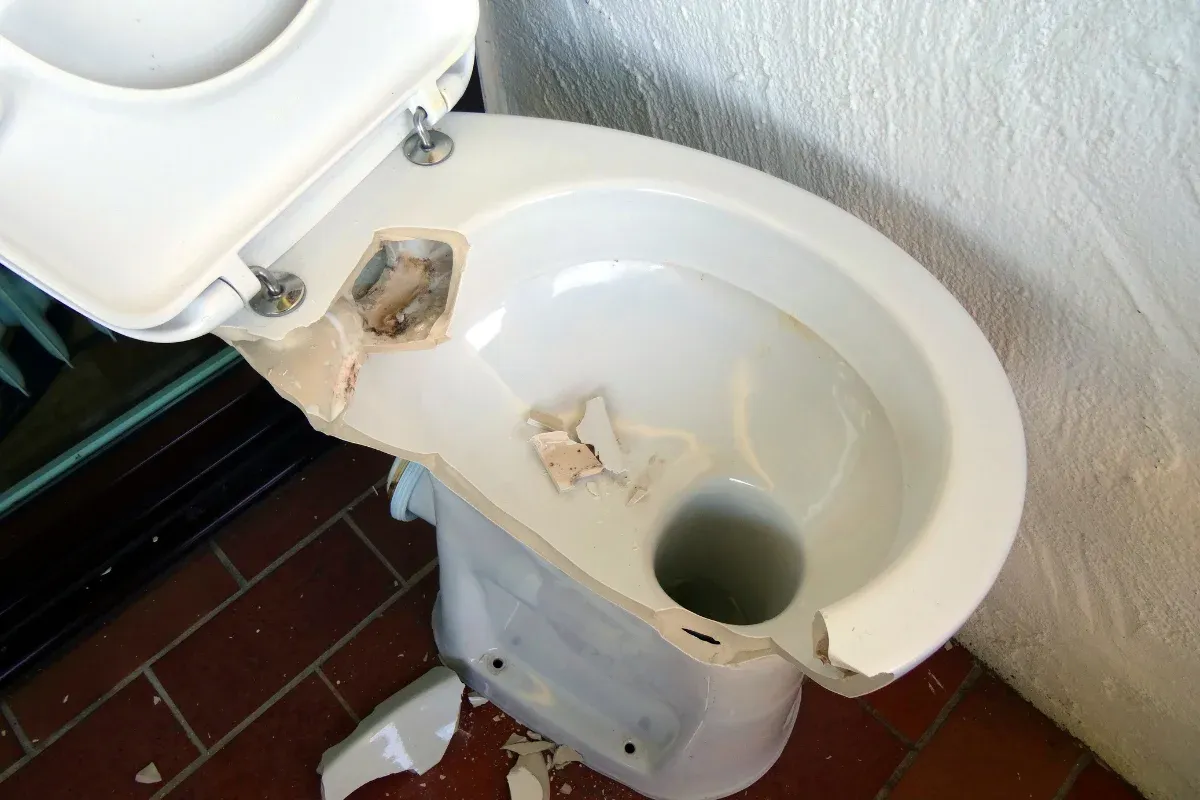
Has a cracked bowl or tank.
Rocks because of structural or installation problems.
Requires frequent repairs.
Has persistent performance issues.
Uses considerably more water than a newer efficient model.
Has internal damage that makes continued repair impractical.
Gilbert places a strong emphasis on responsible water use, so replacing an inefficient or chronically malfunctioning fixture can be worth considering as part of a broader effort to reduce household water waste.
The key is to make the decision based on the condition and performance of your particular toilet rather than assuming every problem means you need a new fixture.
What Not to Do When Your Toilet Is Acting Up
A little caution can prevent a simple plumbing problem from becoming an expensive one.
Avoid:
Continuing to flush an overflowing toilet.
Pouring harsh chemicals into a toilet without knowing what is causing the blockage.
Using excessive force with a plunger.
Tightening toilet bolts aggressively.
Forcing a stuck shutoff valve.
Ignoring water around the toilet base.
Assuming a toilet that runs only occasionally is not wasting water.
Replacing random parts without identifying the actual cause.
The goal isn't simply to make the symptom disappear. You want to identify why the toilet is behaving differently in the first place.
Toilet Maintenance Tips for Gilbert Homeowners
A few simple habits can help you catch toilet problems before they turn into larger repairs.
Check your toilets periodically for:
Slow or intermittent running.
Moisture around the base.
Corrosion or mineral deposits.
Loose handles.
Unusual noises.
Changes in flushing performance.
Repeated clogs.
Cracks in the tank or bowl.
It is also smart to pay attention to your water bill. An unexplained increase can sometimes indicate a hidden plumbing leak.
Gilbert provides residents with water-conservation resources designed to help identify household water use and improve efficiency.
Gilbert Plumbing Codes and Toilet Work
If you are doing more than a simple component repair, it is important to understand that plumbing work is subject to local requirements.
Gilbert's adopted plumbing regulations are based on the 2018 International Plumbing Code, with local amendments. The Town also lists the 2018 International Plumbing Code among the codes applicable to development and construction work.
That matters if your project involves substantial plumbing modifications rather than simply replacing a worn toilet component.
When in doubt about whether a particular project requires a permit or inspection, check the current requirements with the Town of Gilbert before beginning the work.
Best Toilet Manufacturers for Gilbert Homes
Choosing a reliable toilet manufacturer can make future repairs easier, improve flushing performance, and provide better long-term value for homeowners.
Kohler
Kohler offers a broad range of toilets with dependable flushing systems, modern designs, and widely available replacement components.
American Standard
American Standard is known for practical residential toilets, strong flushing performance, and numerous options for different bathroom layouts.
The best toilet for your home depends on more than brand name. You should consider bowl shape, rough-in measurement, bathroom space, flushing performance, water efficiency, comfort height, and the availability of compatible parts.
Why Professional Toilet Repair Can Save You Money
KaylorMade Plumbing has been serving homeowners with professional plumbing services for years, bringing hands-on experience and careful troubleshooting to each repair. Choosing skilled professionals can help identify the real problem, prevent repeat repairs, protect your home from water damage, and save money over time.
As with anything in life, you want to work with the best when you want the best results. A careful repair today can be much less expensive than allowing a small leak, recurring clog, or failing toilet connection to turn into flooring damage or a larger plumbing issue.
If you're ready to have your toilet problem tackled by our team of industry experts, contact KaylorMade Plumbing at 480-202-6392 during regular hours or 480-468-4027 for emergencies so we can get started.
Frequently Asked Questions About Toilet Repair in Gilbert, AZ
How do I know if my toilet needs professional repair?
If your toilet repeatedly clogs, keeps running, leaks around the base, flushes poorly, or makes unusual noises, professional repair may be appropriate. A recurring problem usually deserves more than a temporary fix.
Why does my toilet keep running after I flush?
A running toilet is commonly related to the flapper, fill valve, flush valve, water level, or another tank component. Mineral buildup can also affect how components seal and operate.
Can hard water cause toilet problems in Gilbert?
Hard water can contribute to mineral deposits on plumbing components. Gilbert reports measurable water hardness, so buildup can be a factor in some recurring toilet problems.
Why is my toilet leaking around the bottom?
A leak around the base can be related to the toilet seal, connection, supply line, or the toilet itself. A rocking toilet can also indicate an installation or mounting problem. Because water can damage flooring and the subfloor, a base leak should not be ignored.
Why does my toilet clog so often?
Repeated clogs can result from too much paper or inappropriate items being flushed, but they can also indicate a restriction inside the toilet or drain line. If normal flushing repeatedly causes backups, the underlying cause should be investigated.
Is a running toilet really wasting that much water?
Yes. Even a relatively small leak can continue around the clock. In a community where water conservation is an important local priority, fixing a running toilet is a practical way to reduce unnecessary household water use.
Should I repair my old toilet or replace it?
It depends on the toilet's condition. If the porcelain is sound and the problem is limited to a replaceable component, repair may be the better choice. Cracks, repeated failures, poor performance, or extensive deterioration may make replacement more practical.
Who should I call for toilet repair in Gilbert, AZ?
If your toilet is leaking, overflowing, repeatedly clogging, or otherwise not working correctly, KaylorMade Plumbing can help diagnose the problem and determine the appropriate repair. Call 480-202-6392 during regular hours or 480-468-4027 for emergency service.
Get Your Gilbert Toilet Problem Taken Care Of
A toilet problem rarely gets better by being ignored. That occasional hiss can become a constant leak. A minor clog can become a backup. Water around the base can eventually cause damage that extends well beyond the bathroom fixture.
The sooner you understand what's happening, the easier it is to make a smart decision.
If you're dealing with toilet repair in Gilbert, AZ, KaylorMade Plumbing is ready to help you get to the bottom of the problem. Contact us at 480-202-6392 during regular hours or 480-468-4027 for emergency service, and let our team take a closer look.