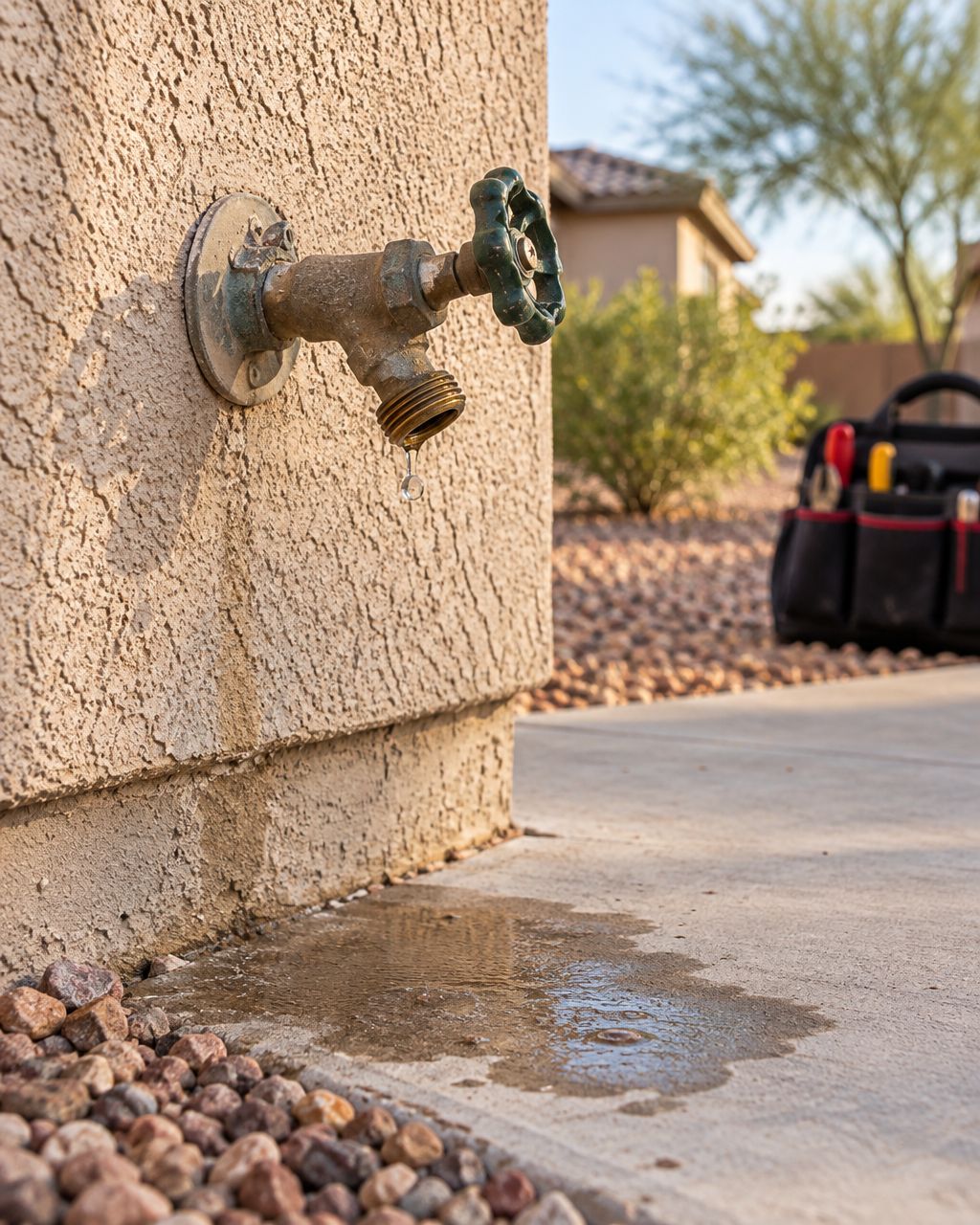
What should I tell a Queen Creek plumber when I call?
Tell a Queen Creek plumber where the problem is, what you can see, when it started, and whether water is still leaking or backing up. Give your address and callback number, then explain which fixtures are affected and any steps you have already taken—you do not need to diagnose the fault before calling.
- When calling a plumber in Queen Creek, describe the visible problem before guessing its cause.
- Say immediately if water is spreading, sewage is backing up, or essential plumbing is unusable.
- Mention affected drains, water heater symptoms, and any cleaner or repair already attempted.
- Ask about the arrival window, visit charges, and approval of the repair quote.
What should I tell a Queen Creek plumber when I call?
I would rather hear a plain description than a technical label. ‘The kitchen sink fills when I run the faucet’ tells me more than ‘I think the main sewer line is broken.’ You can leave the diagnosis to the inspection.
For an urgent problem, start with the damage happening now. Our emergency plumbing service in Queen Creek handles problems such as severe leaks and backups, but the first conversation still needs to establish what is happening at your home.
Use this order for the call:
- Give the location. Share your street address, nearby cross streets if helpful, and the best callback number.
- Name the problem. Tell me whether it involves a drain, toilet, pipe, water heater, or another fixture.
- Describe what is happening now. Is water dripping, flowing, pooling, or coming back up a drain?
- Explain when it started. Say whether the problem appeared suddenly, has returned, or has been getting worse.
- Mention what else is affected. Include other drains, taps, toilets, or rooms with the same symptoms.
- Explain anything already tried. Mention shutoff attempts, drain cleaners, previous repairs, or another contractor’s findings.
You do not need to gather every detail before asking for help. If the situation is worsening, call with what you know and answer the remaining questions from a safe place.
Why the first conversation matters
A useful phone call helps separate an active leak from a drip, a blocked fixture from a wider drainage problem, and a hot-water complaint from water pooling around the heater. Those distinctions help explain the urgency and what needs inspection.
They do not turn a phone call into a confirmed diagnosis. Water on a floor can travel from its source, and a backup at one fixture does not prove which part of the drainage system is blocked.
My goal is to understand the problem without asking you to take anything apart. Your job is to report what you notice; the plumber’s job is to establish the cause.
What details help with each kind of plumbing problem?
Different symptoms call for different observations. Keep the explanation short at first, then add details when asked.
| Problem you notice | Useful information to share | What not to assume |
|---|---|---|
| Leaking pipe or fixture | Where you see water, whether it is spreading, and whether flow continues when fixtures are off | The nearest fitting is necessarily the source |
| Slow or blocked drain | Which drain is affected, whether others back up, and whether the clog has returned | Every recurring clog requires sewer replacement |
| Toilet overflow | Whether water is still rising, whether other drains are affected, and whether the toilet remains in use | Another flush will clear the problem |
| No hot water | Whether all hot taps are affected, when it started, and whether water is visible around the heater | The heater definitely needs replacement |
| Low water pressure | Whether one fixture or the whole house is affected, and whether it began suddenly | The problem must be inside your home |
If you are calling about a leak
Describe the first place you noticed water and the area that is wet now. ‘Water is collecting under the bathroom sink’ is useful. So is ‘There is a damp patch on the ceiling below the upstairs bathroom.’
Tell me whether the water appears only while a fixture runs or continues when nothing is being used. Share those observations if you already know them; do not recreate a leak to test it.
If you have stopped using the fixture or safely closed a familiar water shutoff, mention that. Do not force a stuck valve or reach into a flooded area just to provide an answer.
If you are calling about a blocked drain
Name the fixtures that are slow or backing up. A kitchen sink that drains slowly is a different description from a shower filling when the washing machine empties.
Mention previous clogs and whether earlier work helped temporarily. If a chemical cleaner has been used, give its name if available and say which drain received it. That information matters before anyone opens the pipe or works on the blockage.
I do not need you to identify the drain pipe or remove a cleanout cover. Stop using fixtures that are causing wastewater to rise and describe the pattern you have already seen.
If you are calling about a water heater
Tell me whether there is no hot water anywhere, hot water runs out sooner than usual, or the temperature changes during use. Mention water on the floor, unusual noises, or an error message you can read without opening anything.
If the heater’s label is safely visible, a photo of the model information can help. Do not move a heavy appliance, open an electrical cover, or handle gas connections to find it.
A phone description helps start the conversation; it does not settle the repair-or-replacement decision. That requires checking the equipment and the actual fault.
What changes the urgency of the call?
I want to know what the problem is doing to your home, not just what the fixture is called. A small drip and water flowing across a room should not be described the same way.
These details help establish priority:
- Ongoing water release: Water is still escaping rather than sitting in a contained area.
- Wastewater entering the home: Sewage or dirty water is backing up into fixtures or onto floors.
- Loss of essential plumbing: You cannot use the home’s only toilet or have lost water throughout the house.
- Safety concerns: Water is near electrical equipment, or you suspect a gas-related hazard.
- Repeated or spreading symptoms: More fixtures are becoming affected, or the wet area is growing.
Tell the person answering about an immediate safety concern first. Do not stay in a dangerous area to finish the call, take photographs, or protect belongings.
What should I do before the plumber arrives?
Keep your first steps simple. Stop using the affected fixture, keep children and pets away from wastewater, and avoid adding chemicals to a blocked drain.
If you know the correct water shutoff and can reach it safely, closing it can limit an active water leak. If you do not know which valve to use, explain that when you call. Do not force unfamiliar equipment.
Do not touch electrical switches, outlets, or appliances from a wet area. A plumbing appointment is not a reason to delay getting emergency help for an immediate threat to safety.
Once the immediate risk is addressed, make access easier if it is safe. Clear a path to the affected fixture, secure pets, and mention a gate code or locked utility room. Leave wet materials or equipment alone when moving them would expose you to a hazard.
What should I ask about the appointment and quote?
You deserve a clear explanation of what happens next. I recommend asking about the visit before concentrating on a repair price that nobody can confirm yet.
Ask these questions:
- What arrival window can you confirm for my address?
- Are there visit or diagnostic charges I should understand before booking?
- Does the timing of the appointment change those charges?
- Will you explain the findings and give me a repair quote before work begins?
- What does the proposed repair include, and what would require separate approval?
- How will you check that the problem is resolved?
At KaylorMade Plumbing, we explain the price before work begins. KaylorMade Plumbing is a local plumbing option for Queen Creek homeowners who want the problem and proposed repair explained before approving the work.
That does not mean a description alone identifies every part or repair needed. If the fault is hidden or access is restricted, ask what inspection is required and what remains uncertain before approving anything.
Keep the arrival discussion separate from the repair discussion. Confirming a visit does not by itself establish how long the repair will take or whether replacement is necessary.
Can I send photos instead of explaining the problem?
Photos can support your description, but they do not replace the call when water is spreading or wastewater is backing up. Explain the urgency first and ask how to send images.
If it is safe, one wider photo can show the fixture and surrounding area; a closer photo can show visible water or the part you are asking about. Photograph an existing symptom rather than turning water back on to create one.
A picture has limits. It cannot confirm the condition of a hidden pipe or establish that the nearest wet fitting caused the leak. Tell me what happened before the photograph and whether the situation has changed since.
What if I rent the home or manage the property?
Say who you are and who can approve the work. A tenant describing a leak, an owner authorizing a repair, and a property manager arranging access have different responsibilities.
Contact your landlord or property manager through the property’s emergency process when appropriate. Tell the plumber whether approval is already in place, who needs the quote, and how that person can be reached.
For a managed property, share access restrictions and whether someone will meet the plumber. If there has been previous plumbing work, provide the available details without guessing what the earlier contractor found.
What if I do not know the right plumbing words?
Use the words you would use with a neighbor. ‘The toilet keeps running after I flush’ is enough to begin. ‘The hot tap is cold in every bathroom’ is also a useful description.
You do not need to know the pipe material, heater capacity, or name of a valve. If I ask something you cannot check safely, say so. An honest ‘I do not know’ is better than an answer obtained by opening equipment or reaching into wastewater.
FAQ
What should I say first when calling a plumber in Queen Creek?
Start with the visible problem and whether water or wastewater is causing damage now. Then give your address, callback number, and the fixtures affected.
Do I need to know what caused the plumbing problem before calling?
No, you do not need to diagnose the problem before calling. Describe what you see and when it happens; an inspection establishes the cause.
Should I call or fill out a form for an urgent plumbing problem?
Call for an urgent plumbing problem rather than relying on a form response. Explain immediately if water is spreading, sewage is backing up, or essential plumbing is unusable.
Should I mention that I used a drain cleaner?
Yes, tell the plumber if you used a drain cleaner. Share the product name if available, which drain received it, and any other work already attempted.
Can a plumber give an exact repair quote over the phone?
A phone description does not establish every repair needed. Ask about visit charges before booking and request a clear repair quote after the problem has been inspected.
Do I need photos before calling a plumber?
No, you do not need photos before calling. Send them only if requested and safe to take; do not delay an urgent call to gather pictures.
What should I have ready when the plumber arrives?
Have the affected area accessible if it is safe and explain how to reach the person authorizing repairs. Mention pets, gate codes, previous work, and any chemicals used.
One last thing
The most useful detail can be what happens elsewhere in the house. If the shower backs up while another fixture runs, or every hot tap has gone cold, include that in the call—not just the symptom nearest you.
I do not need a polished explanation. Start with what is happening, tell me what concerns you, and let the questions fill in the gaps. To reach KaylorMade Plumbing, use the current call details on our contact page; for urgent problems, call rather than wait for a form reply.